THE POPULISM OF THE PRECARIOUS: MARGINALIZATION, MOBILIZATION, AND MEDIATIZATION OF SOUTH ASIA'S RELIGIOUS MINORITIES
2020 - 2025
a Freigeist Project funded by Volkswagen Foundation
How do religiously discriminated communities in India and Pakistan become political actors in the 21st century? How does the role of the digital in everyday life change the establishment and sustainability of religious minorities' social movements in transnational and local publics and, in fact, their attempts to emerge as ‘the people'? And what can case-studies of politically active religious minorities in South Asia contribute to recent discussions on the global rise of populism—whose analysis, so far, has been dominated by European and American examples? On the basis of these and other key questions, this project aims to extend studies on the current life-worlds of religious minorities in India and Pakistan, social media's influence on today's South Asian political landscapes, and, crucially, the nexus of populism and religion in its effort to produce concepts of citizenship and ‘the people.'
-
Running from 2021 - 2025 at Freie Universität Berlin
Funding:
1.3 Million Euro by Volkswagen FoundationPositions:
2 Postdocs
1 PhD
1 IT- and Media ExpertOutput:
2 International Conferences
5 Workshops
3 Monographs, 2 Special Issues, 10 Peer-Reviewed Article, 5 Films,Regional Area:
South Asia (Pakistan, India)Disciplines:
Anthropology, Media Anthropology, South Asian Literary Studies
-
How do religiously discriminated communities in India and Pakistan become political actors in the 21stcentury? How does the role of the digital in everyday life change the establishment and sustainability of religious minorities’ social movements in transnational and local publics and, in fact, their attempts to emerge as ‘the people’? And what can case-studies of politically active religious minorities in South Asia contribute to recent discussions on the global rise of populism—whose analysis, so far, has been dominated by European and American examples? On the basis of these and other key questions, this project aims to extend studies on the current life-worlds of religious minorities in India and Pakistan, social media’s influence on today’s South Asian political landscapes, and, crucially, the nexus of populism and religion in its effort to produce concepts of ‘citizenship’ and ‘the people.’
Focusing on Christian, Hindu, and Sikh minorities in Pakistan and Muslim minorities in India, we will first analyze intersectional frames of discrimination (what we will call ‘precarity’). This approach will extend the binary scheme of ‘victim’ and ‘oppressor,’ which has frequently been attached to subaltern and minority studies. In a second step, we will investigate and compare the political practices and the practices of ‘becoming public’ emerging from religious minorities’ potentially precarious life-worlds in both countries. In a third step, we will localize global discourses on populism through the results of our research in South Asia. This will pose new and innovative questions about manifestations of populism on the ground.
To methodologically trace the implicit as well as the explicit discourses of discrimination and the various struggles for equality they generate we will take an interdisciplinary approach. We will analyze popular culture (print media such as pulp fiction or TV soaps), new media (Facebook, Twitter, WhatsApp etc.), and the connected everyday practices of activists and organizations in Hindi, Urdu, and Sindhi. We deem this focus on vernacular languages crucial to champion non-English publics in South Asia. The nexus of text-based analysis (performing close readings of vernacular literature), new methods in the Digital Humanities (computational textual analysis of print and online sources), and anthropological fieldwork (following the actors involved) will reveal the ways in which new communication platforms influence populist forms of constructing ‘the people’ in the 21st century.
-
How do various actors and discourses, for example, nation-states, the military, religious fundamentalism, and popular culture, produce and represent precariousness among religious minorities in India and Pakistan?
Which political practices and forms of becoming public within South Asia’s multi-religious, multi-ethnic, and economically diverse societies emerge from communities that have experienced, and are experiencing, such precarious circumstances?
What can a comparative analysis of social movements led by religious minorities in India and Pakistan in a digital age contribute to the current surge in populism studies?
Research
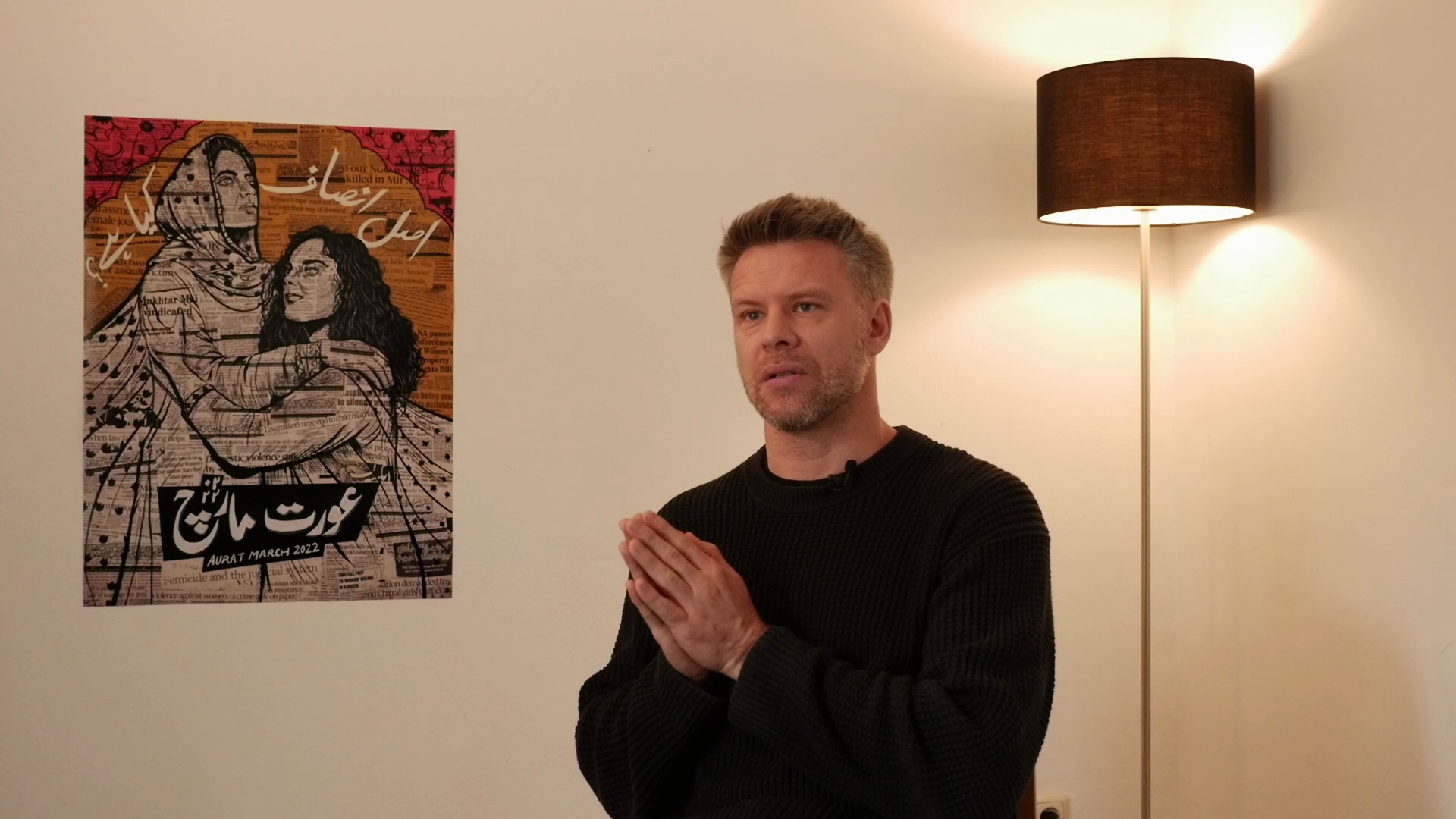
Jürgen Schaflechner
-
Based on my extensive fieldwork in Pakistan, vernacular discourses in Hindi, Sindhi, and Urdu, as well as manual and computationally supported online research, I analyze how “non-Muslims” negotiate religious belonging and citizenship in Pakistan. I show how minorities skillfully navigate their national and international outreach between state surveillance and Islamic groups' pressure for religious uniformity. In different chapters, I describe various tactics of becoming visible by Ahmadis, Christians, Hindus, Jews, and Sikhs. I show how actors navigate between their visibility and invisibility in their day-to-day life; how they strategically utilize the cognitive economies of social media through different forms of affectively-charged visibilities (what I call “affectivism”), and, crucially, how they keep specific grievances invisible that a.) would lead to dangerous repercussions, or b.) that are too complex to be “packaged and commodified” for a human rights market.
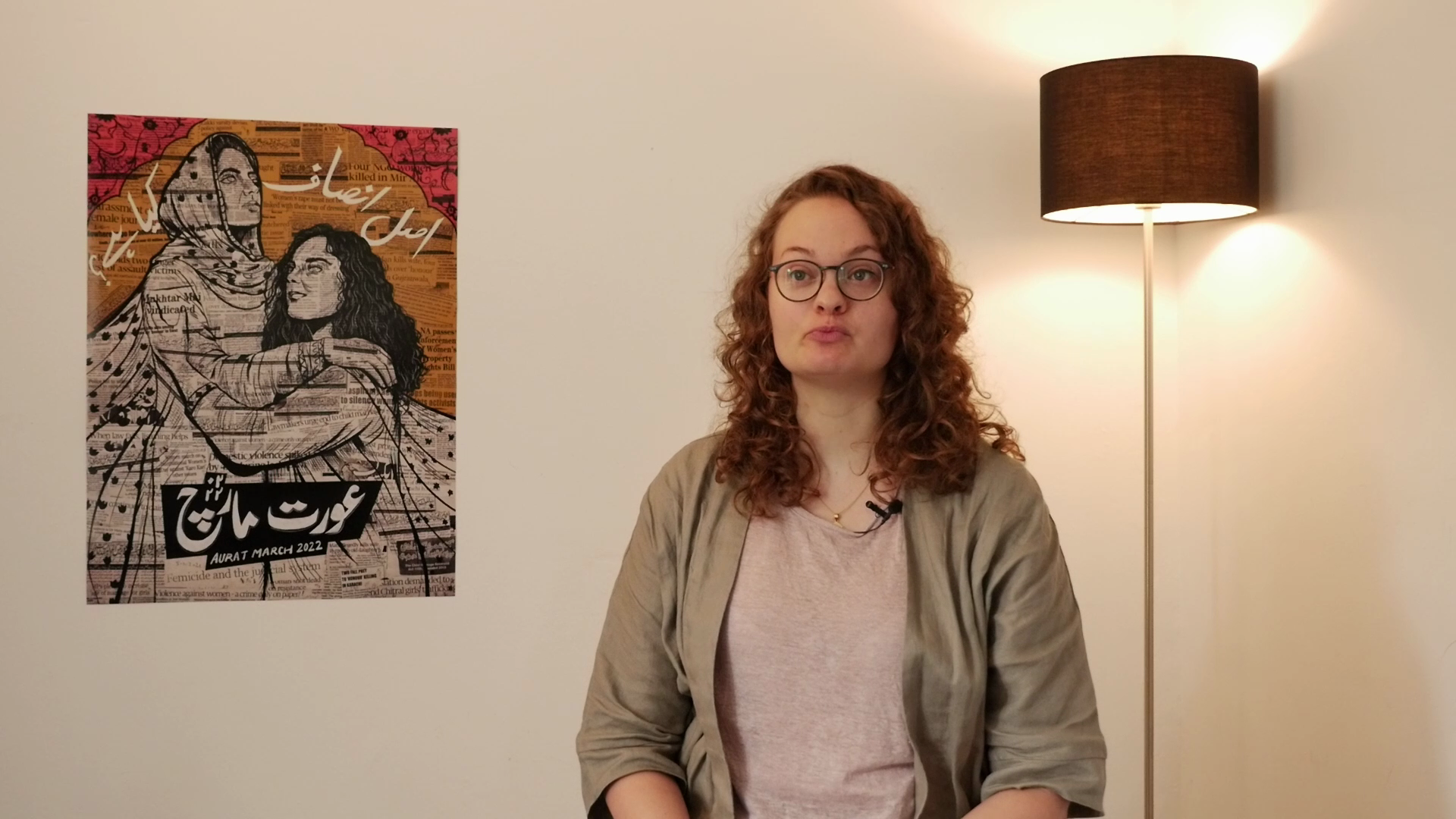
Erin Kelso
-
The Islamic Republic of Pakistan is one of only two modern nation-states founded on the basis of religion. Though their numbers have dwindled dramatically since the partition of British India, there are currently millions of Pakistanis that belong to Hindu, Sikh, Christian, Parsi, and other religious minority communities. These communities have been largely excluded from the national imaginary, in both symbolic and material ways. This exclusion has intensified and, in many cases, become violent as the state’s ongoing Islamization project weaves religion ever more tightly into the social and political fabric of the nation (Saeed 2016).
Today, there is a growing movement among religious minority communities to assert their status as “real” Pakistanis and advocate for the rights and privileges their citizenship should confer. However, the role of women within the movement have remained strikingly circumscribed and their voices conspicuously muted. This is puzzling as the plight of religious minority communities in Pakistan has coalesced around issues affecting women in particular—most notably, the alleged kidnapping and forced conversion to Islam of Hindu women by Muslim men. Activists’ demands that the government address this issue have met some limited success in the passage of the Hindu Marriage Act of 2017, though a more comprehensive forced conversion bill remains stubbornly resistant to consensus, largely due to the influence of conservative elements.
Until now, the figure of the religious minority woman has largely been a silent one in the national conversation on minority rights—the passive object of kidnapping, conversion, violence, and victimization. This project seeks to bring depth of dimension to the “eternal victim” narrative by gathering the accounts of women belonging to Pakistan’s Christian, Hindu, and Sikh communities. My goal is to understand how minority women are represented and their issues taken up by others within the broader movement for minority rights, but more importantly, the ways in which minority women advocate for and represent themselves and their communities.
The research project will have three parts. First, I will examine the intersectional nexus of oppression operating on minority women and how this shapes their lived experiences as citizens of the Islamic Republic of Pakistan. I keep in mind that, not only are minority women subject to the same gendered problems and disadvantages facing Muslim women (sexual harassment and violence, limited mobility, male-dominated public spaces) they have the added burden of being a religious minority—and with it, the constant threat of daily discrimination, mob violence, and unjust incrimination under Pakistan’s strict blasphemy laws. Here it is important not to lose sight of the fact that religious minority women are subject to patriarchal control from within their own communities as well as from without.
Second, I will look at the ways in which religious minority women are organizing, representing their communities to the wider public, and working to make change. I intend to follow key activists, tracing their role in the religious minority rights movement, and mapping points of convergence and divergence with related organizations and movements (between different religious communities, or with the wider women’s movement, for example).
Finally, I focus on visibility and new media, examining how social media platforms enable religious minority women to organize and speak for themselves in ways that were previously unthinkable. I will pay particular attention to the rhetorical devices used to assert “Pakistani-ness,” or legitimate membership in the national community. However, I will also be attuned to the absence of certain voices as well, particularly those marginalized by caste and class, asking: does social media truly democratize representation or is it just another case of elite actors within a marginalized identity group speaking for the whole—the subaltern again being silenced?
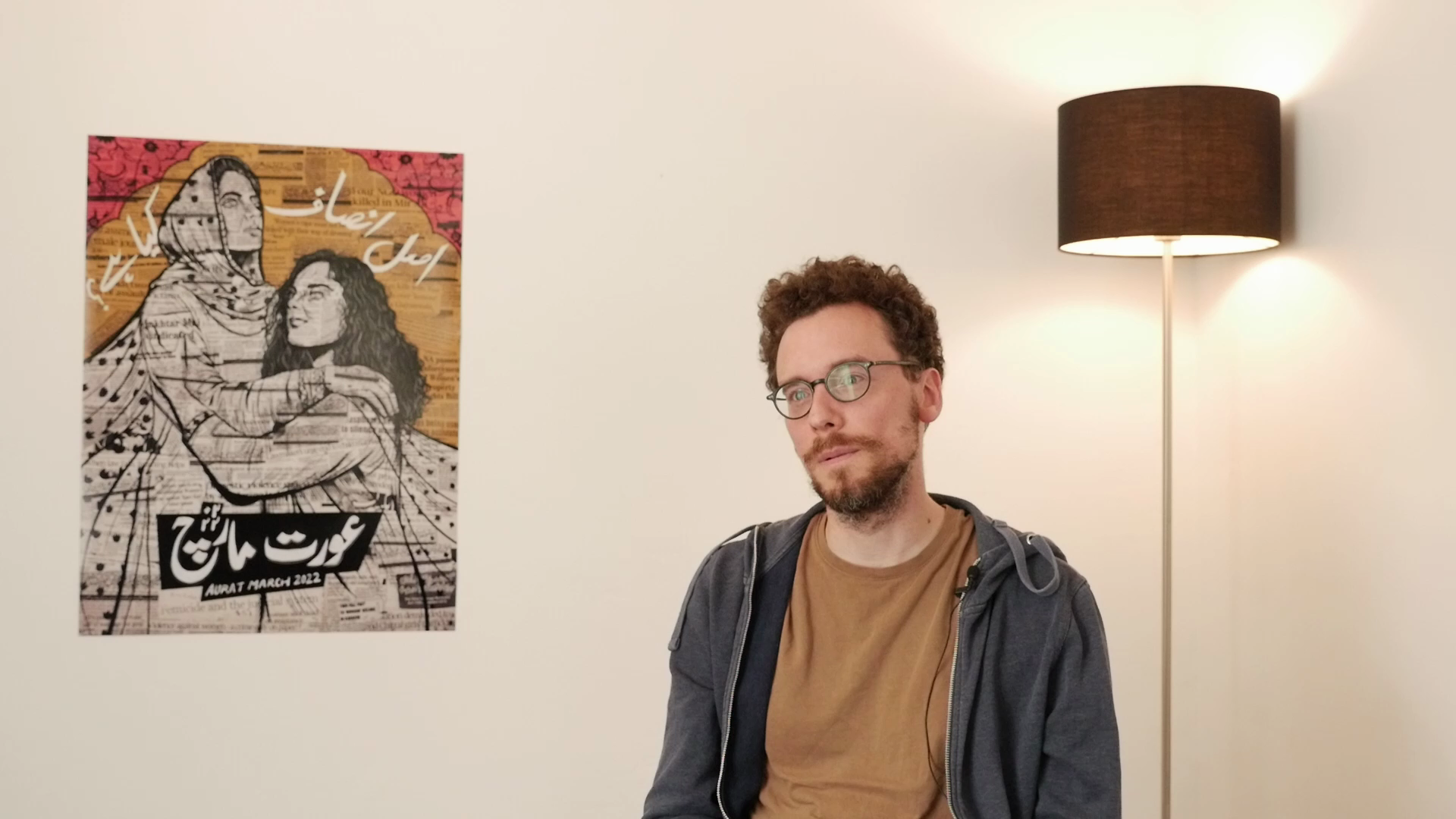
Max Kramer
-
Max Kramer was a postdoctoral fellow at the Volkswagen Freigeist project "The Populism of the Precarious: Marginalization, Mobilization, and Mediatization of South Asia's Religious Minorities". Within this project, he investigates the imaginary and affective dimensions of minoritarian belonging and politics in India. These include images of leadership in popular culture as well as the images and rhetorics used for electoral mobilization or moral critique. Crucially, Kramer, looks into the emancipatory potentials and limitations of these images and speech acts within the circulations of cognitive capitalism and the current political dispensation in India. He combines approaches from star culture and political stardom with those of political mediation and a media anthropology to better understand the situatedness of political imaginary and political affect in an inter-state comparative angle (Uttar Pradesh and Goa).
Taking the national expansion of the Hyderabad based party All India Majlis-e-Ittehad-ul-Muslimeen (AIMIM) and new party entries in Goa (Aam Aadmi Party and Trinamool Congress) as case-studies, Kramer investigates the imaginary aspect of digital mobilization efforts and their limitations set by surveillance, social structure and regulation. He analyses the digital images and speech acts in respect to studies on the institutions and forces that shape and challenge minor(itarian) subjectivities within the nation-state.
Maria-Magdalena Pruß
-
My project focuses on the construction of social and religious boundaries among Christians in colonial and postcolonial Punjab, and especially the ways in which caste and untouchability were reinterpreted and renegotiated as part of interactions between European Catholic missionaries and local Christians. I am particularly interested in the figure of the babu, or “native catechist”, and how such local “Bible teachers” acted as mediators between untouchable and low-caste Christian communities on the one hand, and the European-dominated church hierarchy on the other.
While European missionaries controlled access to resources and crucial channels of communication with foreign donors throughout the colonial period, their actual presence was thin on the ground due to perpetual staff shortages. As a result, native catechists and other local assistants to the clergy often filled the vacuum left by itinerant priests who were only able to visit their widely scattered communities once every month, if not even more infrequently. This was particularly true with regard to rural Christian communities, whose numbers, as a result of mass conversions of entire families and kinship groups from the turn of the century onwards, came to exceed those of urban Christians by far. By effectively replacing the priest in their day-to-day ministries, native catechists assumed a key role in interpreting scriptures and adapting religious ideas and beliefs to social realities and concepts on the ground, including those related to caste and untouchability. Despite their central role, though, the contribution of native catechists to the reshaping of socio-religious boundaries in Punjabi Christianity has been largely obscured in the historiography so far, in which the figure of the missionary “pioneer” still looms large.
For my project, I analyze correspondence, reports, statistics, photographs, and other unpublished archival material related to the work of the Flamish Capuchin mission which are being held at the Documentation and Research Centre on Religion, Culture and Society (KADOC) at the Catholic University Leuven, Belgium. Flamish Capuchin missionaries not only erected the Catholic diocese of Lahore in the late nineteenth century, but were also instrumental in establishing a number of Christian settlements located in the Punjab’s “canal colonies”, newly-irrigated tracts of land that were distributed by the provincial colonial government to various groups of settlers, mostly dominant landholding castes, but also to members of the army as well as Protestant and Catholic missionaries. The Catholic colonies that emerged during this time period, many of them established by orphans and people from untouchable backgrounds in spite of significant hardship, not only survive until today, but still form the backbone of Pakistan’s Catholic community, which, apart from a small Goanese Catholic minority in Karachi, is overwhelmingly dominated by ethnic Punjabis. By reading materials from this mission archive against the grain, my project makes visible and audible the voices and histories of people hitherto obscured in the historiography of South Asian Christianity, and foregrounds their agency in utilizing mission institutions and structures for a radical reinvention of narratives of social belonging. I supplement the materials from this rich and hitherto untapped archive with vernacular writings by native catechists published in Christian periodicals or in the form of pamphlets and books. I argue that by discussing caste and untouchability in their writings, and by performing a specific understanding of these categories as part of their everyday ministry to local Christians, native catechists were crucial for reshaping perceptions of religious and social belonging on the ground.
By foregrounding the voice of local Bible teachers, which is both subtly present in mission sources and expressed more directly in their own writings, and relating their perspectives to larger discussions about religion, caste identity, and social belonging in the context of South Asia, my project contributes to a decolonization of the history of Christianity in the Indian subcontinent as well as to larger debates about caste and religious identity in nineteenth- and twentieth century South Asia.
Taking the national expansion of the Hyderabad based party All India Majlis-e-Ittehad-ul-Muslimeen (AIMIM) and new party entries in Goa (Aam Aadmi Party and Trinamool Congress) as case-studies, Kramer investigates the imaginary aspect of digital mobilization efforts and their limitations set by surveillance, social structure and regulation. He analyses the digital images and speech acts in respect to studies on the institutions and forces that shape and challenge minor(itarian) subjectivities within the nation-state.
Christoph Marx
on ethnographically informed social media research